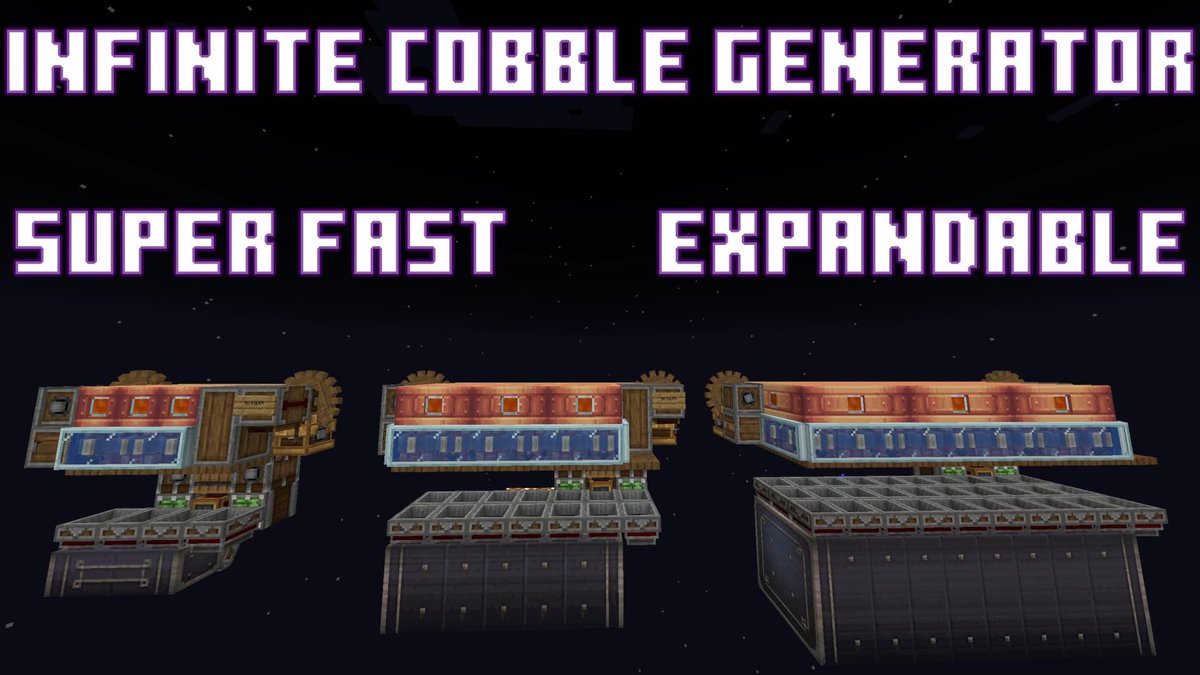
Imagine a world where the most fundamental building block in Minecraft – cobblestone – is truly infinite. No more desperate mining trips, no more resource scarcity for your grand visions. That's the promise and power of a cobblestone generator. These ingenious mechanisms are not just for basic block production; they unlock a vast array of Cobblestone Generator Applications & Uses, transforming how you play, build, and automate in your Minecraft world.
From fueling early survival efforts to enabling late-game mega-builds and complex redstone contraptions, a reliable source of cobblestone is a game-changer. It frees you from the grind, allowing you to focus on creativity and innovation.
At a Glance: Harnessing Infinite Cobblestone
- Infinite Resource: Cobblestone generators provide an unlimited supply of a highly versatile material.
- Core Building Block: Essential for early-game shelters, expansive structures, and defensive walls.
- Crafting Cornerstone: Key ingredient for vital tools, furnaces, and various decorative blocks.
- Redstone Enabler: Crucial for creating basic redstone components like levers and buttons, fueling automation.
- Foundation for Farms: Forms the bedrock of mob farms, auto-smelters, and advanced resource collection systems.
- Scalable Solutions: Designs range from ultra-simple for beginners (e.g., Skyblock) to fully automated for expert players.
The Unsung Hero of Minecraft: What Makes a Cobblestone Generator Tick?
At its heart, a cobblestone generator leverages one of Minecraft's most fascinating natural phenomena: the interaction between lava and water. When flowing lava meets flowing water, they create cobblestone. This simple principle is the engine behind an endless supply of this humble yet indispensable block. Unlike non-renewable resources that deplete over time, cobblestone can be produced indefinitely, making it a cornerstone of sustainable gameplay.
Understanding this basic interaction is key to appreciating the various designs we'll explore. While specific placements can yield obsidian (flowing water over still lava) or stone (flowing lava touching still water), the goal of a dedicated cobblestone generator is, unsurprisingly, an endless stream of cobblestone blocks, ready for your pickaxe.
Infinite Blocks, Infinite Possibilities: The Core Applications of Cobblestone
Having an unlimited supply of cobblestone fundamentally alters your approach to Minecraft. It's not just about having some blocks; it's about having all the blocks you could ever need. This abundance opens doors to incredible projects and efficiencies.
1. Building Material: From Foundations to Fortresses
The most straightforward application of infinite cobblestone is for construction. Early in the game, it's your go-to for a quick shelter or a defensive wall. But as your ambitions grow, so does your need for blocks.
- Massive Structures: Construct colossal castles, sprawling cities, intricate temples, or expansive underground bases without worrying about depleting your local stone quarries.
- Infrastructure: Build endless roads, intricate bridge networks, or grand pathways that weave through your world.
- Terraforming & Landscape Design: Easily sculpt mountains, fill in oceans, or level vast areas for future projects. Its blast resistance also makes it suitable for containing explosions.
- Defensive Structures: Create impenetrable walls, bastions, and mob-proof perimeters for your base.
2. Crafting Essential Gear and Structures
Cobblestone is a foundational ingredient for a surprising number of essential items that drive your survival and progress.
- Tools of the Trade: Your first pickaxe, axe, and shovel often begin with cobblestone. An infinite supply means you'll never be without the means to gather resources or defend yourself.
- Furnaces for Processing: Furnaces, crucial for smelting ores, cooking food, and creating glass, require eight cobblestone each. An unlimited supply means you can build entire smelting arrays, boosting your processing power exponentially.
- Decorative Blocks: Beyond its raw form, cobblestone can be crafted into useful and aesthetically pleasing variations like cobblestone stairs, slabs, and walls, adding depth and detail to your builds.
- Brewing Stands & Dispensers: These useful utility blocks also require cobblestone, further highlighting its versatility.
3. Powering Redstone Innovations
Even the most basic redstone contraptions rely on cobblestone for key components. For players venturing into automation, a cobblestone generator is an absolute must-have.
- Levers and Buttons: The simplest inputs for redstone circuits are crafted from cobblestone, enabling doors, traps, and basic lighting systems.
- Redstone Blocks: While not directly crafted from cobblestone, redstone dust (which is then used to make redstone blocks) is often a byproduct of mining, and generators provide the base material for all surrounding redstone builds.
- Base Material for Contraptions: The sheer volume of cobblestone makes it an ideal, cheap, and disposable block for experimenting with redstone layouts, creating complex mechanisms, or building protective casings around sensitive circuitry. If you're looking to dive deeper, understanding redstone automation basics is a fantastic next step.
4. Foundation for Automated Farms
One of the most advanced and rewarding applications of cobblestone generators is their role in constructing various automated farms.
- Mob Farms: Cobblestone is the perfect, readily available material for building collection chambers, drop chutes, and intricate spawning platforms for mob farms, which yield valuable resources like experience, gunpowder, and string.
- Auto-Smelters & XP Farms: Combined with a robust collection system, generated cobblestone can be automatically fed into furnaces, creating XP when manually retrieved, or simply producing vast quantities of smooth stone, stone bricks, or even concrete when dye is added.
- Support for Other Resource Farms: From enclosing tree farms to creating water channels for crop farms, cobblestone's abundance makes it an excellent support material for almost any automated system you can devise.
Choosing Your Infinite Supply: A Guide to Cobblestone Generator Designs
Not all cobblestone generators are created equal. They vary wildly in complexity, resource cost, and efficiency, offering a solution for every stage of your Minecraft journey. The best design for you depends on your available resources, technical skill, and the scale of your needs.
The Humble Start: Simple Cobblestone Generators
This is where most players begin their journey into infinite resources. Simple cobblestone generators are incredibly easy to build, requiring minimal resources, making them iconic for challenging maps like Skyblock where resources are scarce.
- Resources: Just one Water Bucket (or an Ice Block) and one Lava Bucket.
- How it Works: A simple channel design ensures flowing lava and water meet to create a single cobblestone block, which you then mine. The process repeats instantly.
- Characteristics:
- Pros: Extremely cheap and easy to construct. Essential for resource-limited starts.
- Cons: Low efficiency, producing only one block at a time. Requires constant player interaction (mining).
- Best Use Cases: Early game survival, Skyblock maps, situations where resources are severely limited, or teaching new players the basic mechanic. If you're ready to dive into building one, our comprehensive guide shows you exactly how to make a cobblestone generator.
The Practical Workhorse: Popular Stone Generators with Collection
Stepping up in complexity, these designs often include an initial collection system, making them more efficient for gathering resources without constant manual pick-up. Crucially, many popular designs of this type produce stone first, which then yields cobblestone when mined with a regular pickaxe, or smooth stone with a Silk Touch pickaxe.
- Resources: Typically involves two Water Buckets, one Lava Bucket, inflammable blocks (like stone or cobblestone), five Hoppers, two Chests, and a Sign.
- How it Works: Water flows over a series of stairs or blocks, and lava is introduced to create stone. Hoppers are strategically placed beneath the generation point to catch the mined blocks and feed them into chests.
- Characteristics:
- Pros: Improved efficiency over the simple design, as it can generate multiple blocks simultaneously and automatically collects items.
- Cons: More resource-intensive to build due to the hoppers and chests. Requires inflammable blocks to prevent fire hazards.
- Best Use Cases: Mid-game resource gathering, setting up initial automated smelting, or providing a steady supply for larger building projects. For larger bases, mastering advanced item transport systems becomes essential to move your generated resources efficiently.
The Mechanical Assistant: Piston-Based Cobblestone Generators
For those looking for a slightly more hands-off approach without diving into full automation, piston-based generators are an excellent middle ground. These designs use redstone and pistons to push generated blocks, creating a longer "wall" of cobblestone that can be mined in one go.
- Resources: Requires Water and Lava Buckets, a series of Pistons, Redstone Torches, Redstone Dust, a Redstone Repeater, and solid inflammable blocks.
- How it Works: Lava and water interact to create cobblestone, which is then immediately pushed by a piston. This process repeats, creating a line of cobblestone blocks that extends until the piston's push limit is reached (12 blocks). A redstone clock often triggers the pistons.
- Characteristics:
- Pros: More reliable than simple designs, as blocks are pushed towards the player for easier mining. Allows for mining multiple blocks in a row with a single swing.
- Cons: More complex to build due to the redstone circuitry. Still requires manual mining, albeit in a more efficient manner. Slower block generation rate compared to fully automated options.
- Best Use Cases: Players comfortable with basic redstone, consolidating mining efforts, or creating compact generators where space is a premium.
The Ultimate Automation: Fully Automated Cobblestone Generators (with TNT Duper)
This is the apex of cobblestone generation, designed for players who demand the fastest, most hands-off, and highest-volume production possible. These mega-farms often incorporate complex redstone, TNT dupers, and extensive collection systems to generate, break, and collect cobblestone without any player interaction.
- Resources: Significantly more intensive, requiring multiple Water and Lava Buckets, many Pistons (sticky and regular), Observers, Target Blocks, Redstone Comparators, Repeaters, Slime Blocks, TNT, various redstone dust, Obsidian (for blast resistance), and a sophisticated hopper/chest collection system.
- How it Works: The core generator creates cobblestone, which is then pushed by pistons into a blast chamber. A TNT duper continuously creates and detonates TNT, breaking the blocks, which are then washed by water streams into a vast collection system of hoppers and chests.
- Characteristics:
- Pros: Unparalleled speed and efficiency, producing thousands of cobblestone blocks per hour. Fully automated – set it and forget it.
- Cons: Extremely complex and resource-heavy to build. Requires deep knowledge of redstone, game mechanics (like TNT duping), and blast containment. There's a risk of malfunction (e.g., if pistons reach their push limit, potentially destroying the lava source). Pairing such a powerful generator with a pickaxe boasting the right mining enchantments explained can further boost your productivity.
- Best Use Cases: Late-game survival worlds, massive building projects, large-scale industrial setups, or players who enjoy mastering complex automation. While often seen in elaborate survival worlds, even Skyblock survival strategies can eventually incorporate elements of automation for long-term resource needs.
- Caution: Monitor these machines closely. A common pitfall for the TNT duper type is when regular pistons reach their push limit without being reset, which can lead to the lava source being deleted and the generator stopping. Always include a reliable deactivation lever.
Maximizing Your Infinite Yield: Best Practices & Pro Tips
Building a cobblestone generator is just the first step. To truly harness its power, consider these best practices:
- Enchant Your Pickaxe: Always use a pickaxe to mine cobblestone. For maximum efficiency, enchant it with:
- Efficiency: Mines blocks faster.
- Unbreaking: Increases durability, meaning fewer repairs or replacements.
- Fortune: When mining stone (from stone generators), Fortune III drastically increases the cobblestone drop rate.
- Silk Touch: If you want smooth stone directly from a stone generator (or want to move generated cobblestone in its "stone" form for later processing), Silk Touch allows you to mine stone blocks without converting them to cobblestone.
- Implement a Collection System: Even with simple generators, integrating hoppers and chests will save you countless hours of manually picking up blocks. For automated systems, a robust collection network is non-negotiable.
- Safety First (Lava!): Always be cautious around lava. Use fireproof blocks (like stone, cobblestone, or obsidian) for generator construction and create barriers to prevent accidental falls or spread of fire.
- Prevent Malfunctions: For automated designs, especially those with TNT dupers, understand their limitations. Regularly check that pistons aren't at their push limit, and always have a kill switch (lever) to safely shut down the machine for maintenance or if something goes awry.
- Go AFK Strategically: With automated generators, you can go AFK (away from keyboard) to accumulate vast amounts of cobblestone. Ensure your collection system is sufficient for the generator's output, or you'll quickly overflow and lose blocks.
Your Top Questions About Cobblestone Generators, Answered
Can I use cobblestone generators in the Nether?
Yes, you can! However, you must be extremely cautious. The Nether is full of lava, and water behaves differently (it evaporates). To create a generator, you'll need to prevent water from evaporating by using it to create cobblestone immediately or by finding specific ways to contain it (e.g., by using ice blocks). Fire is also a constant threat, so use fire-resistant materials.
What happens if I break the water or lava source blocks?
The generator will stop functioning immediately. The interaction relies on the continuous flow from these source blocks. If a source block is accidentally broken, you'll need to replace it to restart the generation process.
How do I transport large amounts of cobblestone efficiently?
For smaller amounts, your inventory is fine. For anything substantial, you'll want to leverage chests for storage and hoppers for automatic feeding into those chests. For truly massive quantities over long distances, consider building item transport systems like water streams, droppers/dispensers with item elevators, or even sophisticated minecart systems with storage minecarts. Shulker boxes are also invaluable for carrying huge stacks in your inventory.
Are there other types of generators besides cobblestone?
Absolutely! While cobblestone is the most common, players have devised generators for other renewable resources. These include:
- Stone Generators: Often identical to advanced cobblestone generators, but sometimes designed to produce only stone without needing to be mined for cobblestone.
- Basalt Generators: Using lava, blue ice, and soul soil.
- Ice Generators: Using cold biomes and water.
- Sand and Gravel Generators: These are trickier, often relying on gravity blocks and specific game mechanics, sometimes involving TNT dupers for mass production.
Can I build cobblestone generators in Creative Mode?
Yes, you can! Creative Mode is an excellent environment for experimenting with different generator designs without the resource constraints of Survival Mode. It's a great way to test out new ideas, refine existing designs, or simply understand the mechanics before committing to a build in your survival world.
Beyond Blocks: Why Infinite Cobblestone Changes Your Minecraft Experience
A cobblestone generator is far more than just a source of blocks; it's a testament to your ingenuity and a gateway to higher-level gameplay. It alleviates the tedious grind of resource gathering, freeing you to focus on the grander aspects of Minecraft: creativity, exploration, and automation.
Whether you're an aspiring architect dreaming of a colossal fortress, a redstone enthusiast planning an automated empire, or a survivalist aiming for ultimate efficiency, a reliable source of infinite cobblestone is your foundational step. Experiment with the different designs, find what suits your playstyle and needs, and watch as your Minecraft world transforms into a realm of boundless possibility. The only limit is your imagination – and now, not your cobblestone supply.